

Outreach Programs
Our outreach programs operate as autonomous entities, each with its own dedicated medical student leadership team, rather than being directly managed by HOYA Clinic coordinators. They all work closely with the HOYA Clinic, however, interfacing regularly with our development coordinator.
For more information or inquiries about the Outreach Programs, please contact our Development Coordinator, Ali Idriss, ai489@georgetown.edu.
Foot Clinic
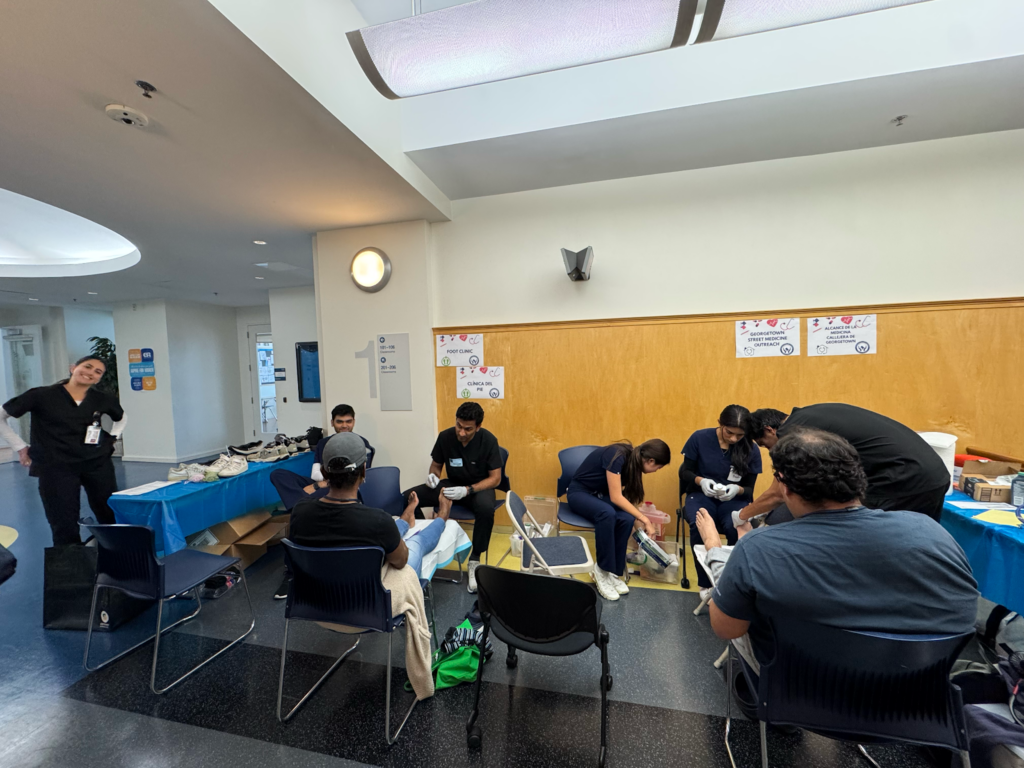
Since 2020, HOYA Foot Clinic has collaborated with community partners throughout DC to provide compassionate and skillful foot care to our most vulnerable neighbors. Our clinics feature basic podiatric interventions, including toe fungus management, callus shaving, nail clipping and epsom-salt-enriched foot baths. Volunteers are trained to conduct a proper examination of the foot to identify potential health concerns such as poor blood circulation, delayed wound healing, and neuropathy.
Foot Clinic is generously supported by MedStar’s Podiatry team, including Dr. John Steinberg, Dr. Ali Qadri, and Dr. Bilal Louzati and HOYA Clinic’s faculty physicians, including Dr. Eileen Moore and Dr. Tobi-Lynn Smith. Our other community partners include N Street Village, Miriam’s Kitchen, Harriet Tubman Women’s Shelter, Faith United Church of Christ, Carlos Rosario 801 East Men’s Shelter, Shirley’s Place, and Father McKenna Center. We are extremely grateful to our HOYA Clinic partners, both medical and non-medical affiliates, that have made our success this year possible. It is an incredible privilege for us to be formed by our patients’ wisdom, history, and knowledge. We look forward to new directions we have yet to foresee as the principles of HOYA Clinic continue to shape our unique callings as future physicians.
Street Medicine
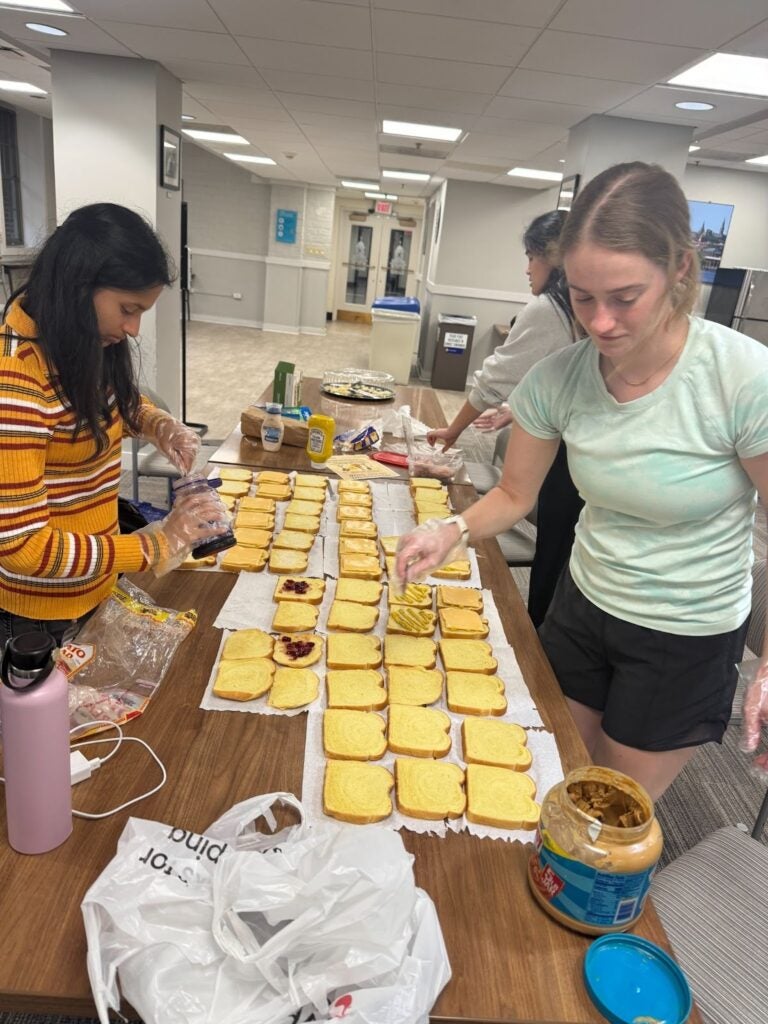
Georgetown Street Medicine Outreach (GSMO) is a student-led organization at Georgetown University School of Medicine, operating under the HOYA Clinic umbrella, dedicated to supporting individuals experiencing street homelessness in Washington, D.C. Our mission is to meet immediate needs while building meaningful, trust-based relationships within the community. Through weekly outreach, we distribute meals, water, and essential supplies—such as hygiene products, clothing, and seasonal items—and adapt our efforts based on community-identified needs.
In addition to street outreach, GSMO runs a patient navigation program at Miriam’s Kitchen in partnership with GW medical students, where we provide health education, basic clinical services (including blood pressure checks and wound care), and connections to medical resources. Volunteers also serve regularly at the Georgetown Ministry Center, helping us deepen community engagement and better understand ongoing needs.
Over the past year, GSMO has expanded its reach and impact by increasing volunteer participation, broadening distribution efforts, and strengthening partnerships across Georgetown and the D.C. community. Looking ahead, we aim to enhance educational programming in trauma-informed care, expand point-of-care services, and continue building sustainable partnerships—all while prioritizing consistent, compassionate outreach.
Food is Medicine
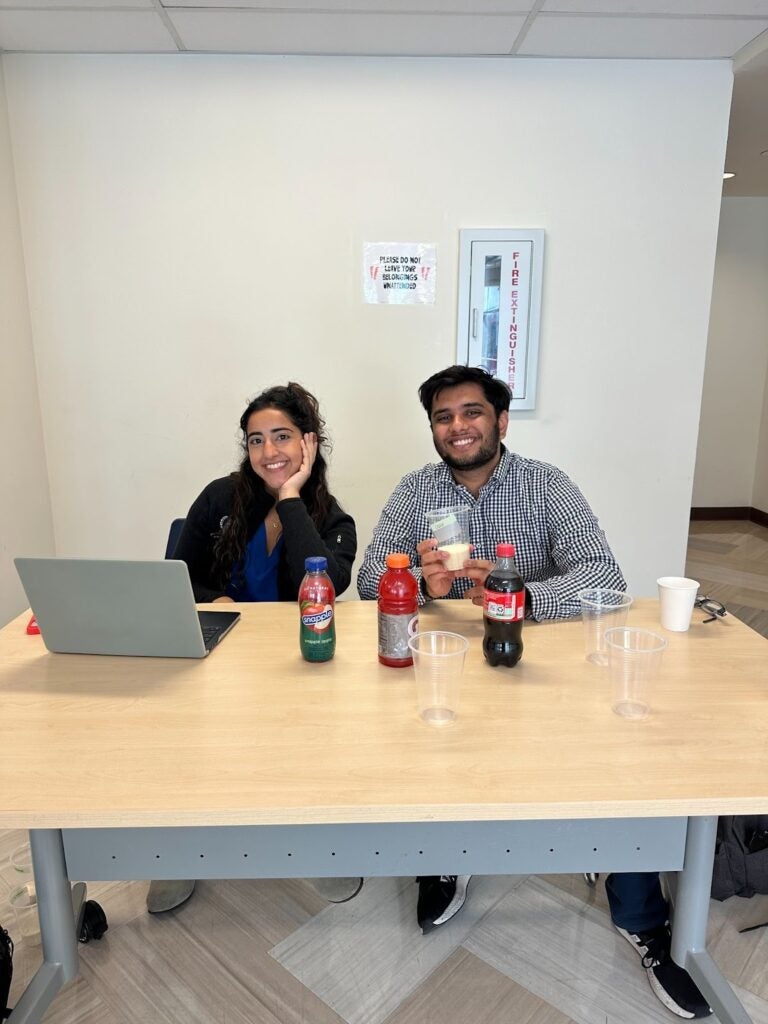
Food is Medicine is a student-led initiative at Georgetown University School of Medicine focused on addressing food insecurity and promoting health through nutrition education. The group is grounded in the belief that access to nutritious food is a fundamental component of health, and works to empower individuals with the knowledge and tools needed to make sustainable, health-promoting dietary choices. Through outreach and educational programming, the team aims to bridge gaps in understanding around nutrition and its role in preventing and managing chronic disease.
At the core of Food is Medicine’s work is hands-on, community-centered education. Medical student volunteers engage directly with individuals through health fairs, workshops, and interactive sessions that focus on practical topics such as reading nutrition labels, understanding sugar content, and incorporating balanced, affordable meals into daily life. The group also develops accessible educational materials and simple, nutritious recipes to make healthy eating more attainable and approachable.
Looking forward, Food is Medicine is committed to expanding its educational initiatives and continuing to integrate nutrition into patient care and community outreach. By equipping both patients and future physicians with a stronger foundation in nutrition, the organization aims to advance health equity and promote long-term wellness through food as a powerful tool for prevention and care.
Hoya DOPE (Drug Overdose Prevention & Education)
Hoya DOPE is a student-led initiative dedicated to opioid overdose prevention, community education, and reducing the stigma surrounding naloxone (Narcan). The organization’s mission is to empower individuals across Washington, D.C. with the knowledge and tools needed to recognize and respond to opioid overdoses, ultimately preventing fatal outcomes and promoting naloxone as an essential public health resource.
Through trainings, outreach events, and educational campaigns, Hoya DOPE equips students and community members with practical overdose response skills while increasing awareness of the ongoing opioid crisis. The group also focuses on normalizing carrying naloxone and expanding access to this life-saving medication. As the initiative continues to grow, it remains committed to broadening its reach, strengthening community engagement, and advancing harm reduction efforts across D.C.
Child Assessment Team
The HOYA Clinic is proud to offer childhood developmental milestone screenings though the HOYA Clinic Child Assessment Team. CAT screens children between 2 months and 5 years and 10 months of age using the Ages and Stages Screening Questionnaire to identify children who may need some extra help before they begin school. Any parent interested in getting their child additional tools to succeed can then be connected to free services offered Strong Start and Early Stages, two programs run in conjunction with DC Public Schools.
Screenings are offered between 6:30 and 8:30 PM every Thursdays at the HOYA Clinic. Appointments are not required, but are encouraged. Please call the HOYA Clinic at 202-468-4816 for more information, or to schedule an appointment.
Behavioral Health Team
The Behavioral Health Team (BHT) is a developing HOYA Clinic initiative focused on improving mental health outcomes for vulnerable populations in the D.C. community. Led by medical students, BHT aims to integrate mental health screening and support into community-based care, with an emphasis on early identification of common conditions seen in primary care settings.
The team is building a trained cohort of student volunteers equipped to conduct standardized behavioral health screenings, including tools such as the PHQ-9, GAD-7, and AUDIT. In addition to formal certification in collaborative behavioral healthcare, volunteers receive training in key skills such as motivational interviewing, trauma-informed care, and culturally responsive communication to better support diverse patient populations.
Beyond clinical screening, BHT contributes to community outreach by developing and distributing accessible mental health education materials and resource guides. As the program continues to grow, the team aims to expand direct patient engagement and strengthen the integration of behavioral health into HOYA Clinic’s broader model of care.
Eye Health Initiative
The Georgetown Eye Health Initiative (GEHI) is a student-led organization dedicated to improving access to vision screening and eye health education for underserved communities in Washington, D.C. Through community outreach and health fairs, medical students provide basic vision screenings and educate individuals on topics such as glaucoma risk, diabetic eye disease, and age-related vision changes, with the goal of promoting preventative care and early detection.
GEHI also focuses on building student capacity through hands-on training in eye screening techniques and equipment. Looking ahead, the organization aims to expand its impact through regular screening events, advocacy efforts, and initiatives such as its glasses drive to increase access to corrective lenses and essential eye care resources.
Derm Clinic
The Hoya Dermatology Clinic is a student-led initiative focused on improving skin health through education, prevention, and community outreach. The organization works to increase access to reliable, evidence-based dermatologic information, particularly in underserved communities, with an emphasis on topics such as sun safety, acne management, and early detection of skin cancer.
Through health fairs, educational materials, and interactive demonstrations, the team aims to promote skin health equity and empower individuals to better care for their skin. As the program grows, it seeks to expand its outreach efforts and develop sustainable models for community-based dermatologic education and prevention.
Big HOYA Little Saxa
Big Hoya Little Saxa is a student-led organization that partners with Community of Hope to provide relationship-centered, play-based childcare for children and adolescents living in transitional housing at The Triumph in Ward 8, Washington, D.C. Through biweekly volunteering with the Fam Club, we aim to create a safe, supportive space where children experiencing instability can relax, build trust, and simply enjoy being kids. Our work is grounded in the belief that consistent, compassionate presence can have a meaningful impact on children navigating challenging circumstances.
Volunteers engage children of all ages through interactive and creative activities such as games, art projects, and imaginative play, tailoring each interaction to the child’s developmental needs. While we spend time with the children, parents and caregivers are given a valuable opportunity to rest and recharge. Through these shared moments, we foster connection, empathy, and a deeper understanding of the lived experiences of the families we serve—values we hope to carry forward into our future roles as physicians.